Watch the video

Seen already


Article · 18 November 2026 · 5 min read · Energy storage
Commercial battery storage in the UAE makes sense when a site needs to cut peak demand, run on its own solar after sunset or keep critical loads alive during an outage. Buying it well comes down to five things: an honest load study, the right chemistry (in practice, LFP), certifications the local authorities will accept, a clear approval route with the utility, and a supply contract that covers shipping, commissioning and warranty. Below is the step-by-step route for commercial and industrial (C&I) users.
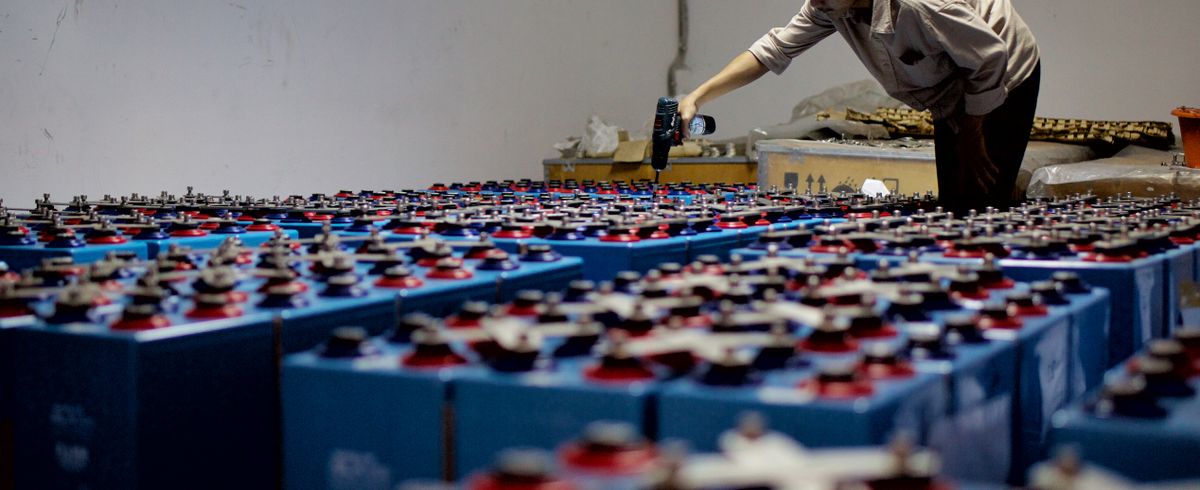
Industrial battery banks are becoming a standard part of commercial energy infrastructure in the UAE.
In February 2026 the Abu Dhabi Department of Energy launched a Solar Energy Self-Supply Policy. It lets eligible customers add batteries to rooftop solar to run facilities in the evening. The first phase covered agricultural users, and households were added in April 2026. EWEC's plans now envisage up to 15 GW of energy storage in Abu Dhabi by 2035. Masdar and EWEC are building 5.2 GW of solar with 19 GWh of batteries for around 1 GW of round-the-clock power from 2027. More on Masdar's pipeline is in our news piece on how the UAE renewable pipeline exceeds 12 GW as storage takes centre stage.
Start with 12 months of interval metering data, then define the battery's job:
Size for usable capacity at the end of the warranty, not at the nameplate on delivery day. Allow for depth of discharge, round-trip losses and summer cooling load.
Lithium iron phosphate (LFP) is now the standard for stationary storage. InfoLink Consulting data shows LFP accounts for around 90% of deployments, and global storage cell shipments in the first half of 2026 reached 467.84 GWh, almost double the year before. For C&I buyers, LFP's thermal stability, cycle life and price usually outweigh NMC's higher energy density.
Send us your load profile. We will size the system, shortlist Chinese LFP manufacturers and calculate delivered cost to your site in the UAE.
Ask the supplier for the full document set before you sign:
Approval is handled emirate by emirate. In Dubai, DEWA's Shams Dubai process covers PV connections. For a battery, prepare equipment models, a revised single-line diagram and operating modes, and confirm the application route with DEWA. In Abu Dhabi, check eligibility under the self-supply policy with the DoE and your distribution company. Local fire authorities review location, separation, detection, ventilation and emergency isolation. NFPA 855 is widely referenced, but confirm what the authority actually requires. Also check with the Ministry of Industry and Advanced Technology whether conformity certification applies.
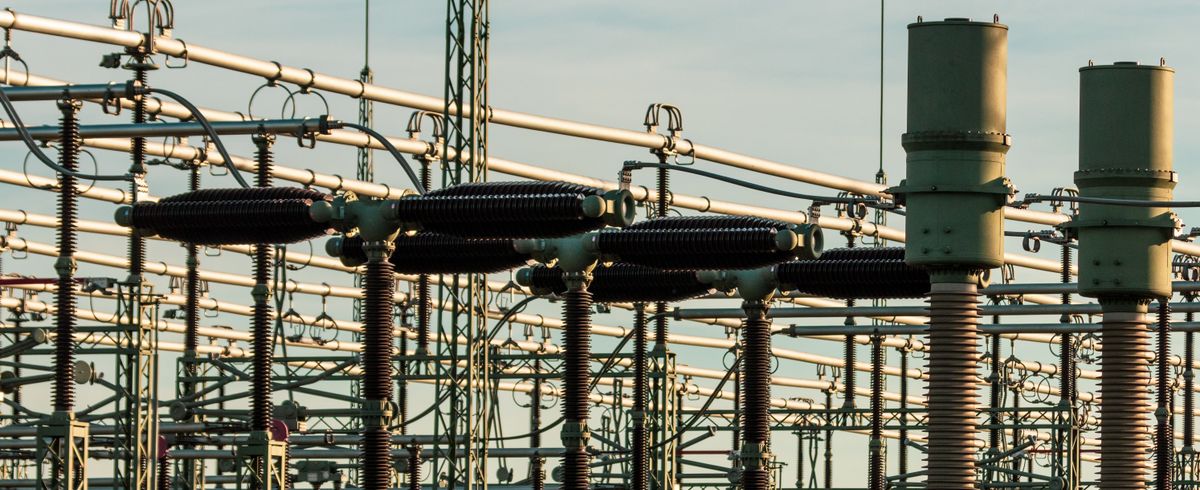
Grid connection of a BESS requires certified equipment and utility approval before commissioning.
Most cells and many complete systems come from China. By sea, lithium-ion batteries ship as Class 9 dangerous goods (UN 3480/3481) under the IMDG Code. They need a Dangerous Goods Declaration, proper labelling and a carrier that accepts the booking. Book early: not every line accepts large battery shipments. For customs and duty, see our guide on how to import industrial equipment from China to the UAE and GCC.
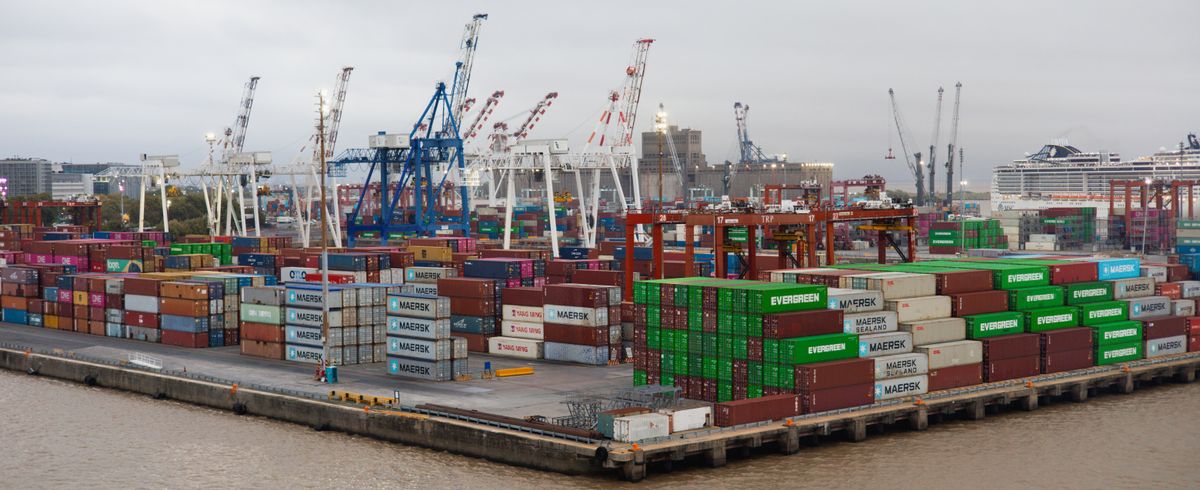
Battery systems from China ship as dangerous goods in containers, so logistics planning starts early.
Check how capacity retention is defined, the throughput or cycle cap, the operating temperature and state-of-charge limits, who replaces modules and how fast, and whether remote BMS monitoring is included. In the UAE climate, enclosure HVAC reliability directly affects degradation.
Under EP+S (engineering, procurement and supply) we specify the system and audit Chinese manufacturers through our Guangzhou office. As PMC we manage the project and act as technical owner's representative through approvals and installation. Our PCL team handles dangerous-goods logistics and customs clearance. We also supervise installation and commissioning. We work from Dubai, Guangzhou, Almaty, Astana, Moscow and Tashkent. To see the latest storage technology in person, visit the World Future Energy Summit 2027 in Abu Dhabi or Middle East Energy and Intersolar Middle East 2027 in Dubai.
LFP for most C&I projects: it accounts for around 90% of stationary storage deployments.
Yes, in practice. In Dubai, confirm the application route with DEWA; in Abu Dhabi, check eligibility under the DoE self-supply policy.
At minimum IEC 62619, UL 9540A test reports, UN 38.3 and inverter safety and grid-code certificates.
By sea, as Class 9 dangerous goods (UN 3480/3481) under the IMDG Code.
Have questions? Get a consultation from our manager.
Sources: Abu Dhabi Media Office, Abu Dhabi Department of Energy, ESS News (pv magazine), Masdar, InfoLink Consulting, Maersk, SurgePV, DEWA. This material is for information only; please confirm requirements with the competent authorities.